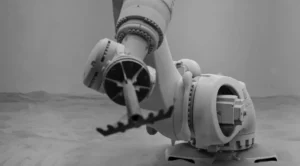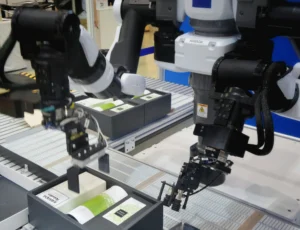
The embodied AI training data problem is structurally different from the language model data problem. Language models learned from the internet. Embodied AI must learn from the physical world — and that data does not exist yet at scale.
Why language models scaled faster than embodied AI training data
Large language models achieved their capability leap through a convergence of scale, architecture, and data. The data part is often underappreciated: the internet provided a near-unlimited supply of human-generated text, spanning virtually every domain, task type, and level of expertise. Training a language model required building a pipeline to ingest data that already existed in enormous volume.
Embodied AI does not have that advantage. Physical interaction data does not exist on the internet. A robot learning to manipulate objects, navigate environments, or assist with physical tasks cannot learn from YouTube videos the way a language model learns from text. It needs proprioceptive data, force feedback, and action labels tied to specific hardware configurations. That data must be collected, not scraped.
The data flywheel dynamic
Despite the harder data problem, embodied AI exhibits a flywheel dynamic that may ultimately produce faster compounding than language models did. The mechanism:
A deployed robot that performs useful work generates observations. Those observations — sensor data, camera feeds, joint states, interaction outcomes — are potential training data. A robot deployed in a warehouse, a hospital, or a factory accumulates physical interaction data at a rate no human data collection program can match. Each deployment is simultaneously a revenue source and a data asset.
Teams that figure out how to close the loop — collect from deployment, label efficiently, retrain, redeploy — compound their capability advantage with each deployment cycle. Teams that do not close the loop are dependent on expensive manually-collected datasets that do not grow automatically with their deployment footprint.
What makes the flywheel hard to start
The flywheel is real, but it has a cold-start problem. To deploy a robot that generates useful training data, you need a policy that is good enough to deploy. To train that policy, you need training data. The bootstrapping problem is the primary reason robot AI development is slower than language model development — you cannot download the internet equivalent of embodied experience.
This is where external data collection infrastructure becomes strategically important. The teams that build or access high-quality demonstration data early can bootstrap their first-generation policies to a deployable threshold, begin the flywheel, and then compound from deployed data. Teams that cannot access early demonstration data stay stuck in the bootstrapping phase longer.
Why embodied AI data is more defensible than language model data
Language model training data has no meaningful competitive moat. Text scraped from the internet is available to any team with the infrastructure to process it. The training data itself is a commodity; the competitive advantage is in architecture, compute, and post-training alignment.
Embodied AI training data is fundamentally different. Physical interaction data for specific tasks, hardware platforms, and deployment environments is expensive and slow to collect. A dataset of 500,000 high-quality humanoid manipulation demonstrations represents months of operational data collection, operator training, and QA work. It is not replicable by a competitor overnight. The data itself is a durable competitive asset in a way that language model training data is not.
Implications for AI companies building in this space
The strategic question for embodied AI companies is not just “how do we train better models” but “how do we build a data asset that compounds over time.” Companies that treat data collection as a cost center rather than a strategic investment will find themselves in an increasingly difficult position as the flywheel advantages of well-capitalized competitors compound.
The practical implication: invest in data infrastructure early, even before you need it. Build the collection systems, the labeling pipelines, and the quality frameworks before your model architecture demands them. The teams that do this will have a training data advantage that is difficult to close once established.
The teams that build data infrastructure before the model demands it will have a compounding advantage that is difficult to close. If you’re thinking about where to invest early, see the full Roborax service stack or scope a program.