

Warehouse Picking Robots: What Your Training Data Strategy Is Missing
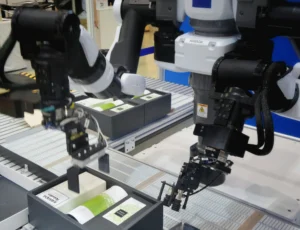
Warehouse robot training data programs consistently underperform their lab benchmarks in production. The reason is almost never the model architecture. It is almost always a
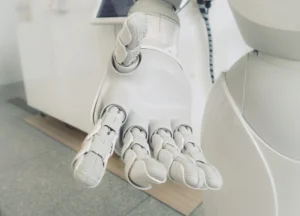
Humanoid data collection covers whole-body trajectories, dexterous hand manipulation, bipedal locomotion, and loco-manipulation — the full stack of behaviors a humanoid policy needs to learn. We collect across 24 platforms so your model transfers across embodiments.
Humanoid data is hard
High DoF, full-body coordination, and platform-specific kinematics make humanoid collection the most complex data work in robotics. We’ve built the operator bench and rig fleet to handle it.
8 active humanoid programs.
24 platforms supported.
50K+ trajectories delivered.
Where we collect
41+ delivery centers across 12 countries. Every program runs from a Roborax hub near your target time zone.
Asia Pacific
India · Philippines
Americas
USA · Canada · Colombia · Jamaica · El Salvador · Belize
EMEA
UK · Albania · Kosovo · Morocco
Four data classes that bipedal foundation models need but generic data pipelines rarely produce.
Coordinated upper + lower body kinematics, 30Hz, in your robot frame.
Same task captured across multiple humanoid morphologies for transfer learning.
Per-finger joint logs and grasp state for complex object handling.
Walking while carrying, reaching while balancing — the chains that break generic policies.
Four stages that produce humanoid-ready data, not adapted-from-arm data.
Bring up your humanoid or use ours. Joint calibration captured. URDF locked.
Whole-body teleoperators trained on your kinematic envelope and balance constraints.
Trajectories captured against your acceptance bar. Stability and contact monitored.
Same trajectory rendered in multiple morphologies where the platform supports retargeting.
Production humanoids, research bipeds, and the rigs that retarget between them.
Production
Production
Production
Production
Research
Production
Four verticals. One data partner.
Long-horizon tasks in real environments.
Pick-pack-place across real SKU diversity.
Procedure-grade demos on surgical platforms.
Remote operator-driven data collection.
In-person task demos for imitation learning.
RGB-D, LiDAR, force, and tactile streams.
FAQ
From the blog
Lessons from 50,000 Humanoid TrajectoriesWhat 50,000 trajectories taught us about humanoid data collection.
From the blog
Humanoid Robot Training Data: How Much Do You Need?Volume requirements for humanoid foundation model training.
Tell us the platform, the tasks, and the morphology mix. Six weeks to first cross-embodiment batch.
FROM THE FIELD

Warehouse robot training data programs consistently underperform their lab benchmarks in production. The reason is almost never the model architecture. It is almost always a


Surgical robot training data has requirements that no general-purpose robotics data program is built to meet out of the box. Sub-millimeter precision, HIPAA compliance, and

A robotics data quality assurance pipeline is not a checklist or a review meeting. At production scale, robotics data quality requires automated validation, per-operator metrics,

Robot data annotation is not image labeling with a different name. The temporal structure of robot trajectories, the grounding in physical task semantics, and the

Sim-to-real robot training with synthetic data is one of the most powerful techniques in embodied AI — and one of the most misunderstood. The gap

The embodied AI training data problem is structurally different from the language model data problem. Language models learned from the internet. Embodied AI must learn